The Fleet That Fought Itself

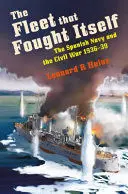
The Fleet That Fought Itself

The Spanish Navy And The Civil War 1936-39

Leonard R. Heinz

In July 1936 a military revolt brought civil war to Spain; it erupted into a bitter political contest and a brutal land war which have been well covered by historians - a less appreciated dimension of the conflict was the crucial role played by the navies of both sides. This new book describes and explores the naval operations that played out over thirty-eight months and spread...

Publisher:
Seaforth
Subject:
History Of Spain
ISBN:
978-1-0361-1398-8
Pages:
384
31,25 €
IVA included
Low stock
Add to favorites

Synopsis

In July 1936 a military revolt brought civil war to Spain; it erupted into a bitter political contest and a brutal land war which have been well covered by historians - a less appreciated dimension of the conflict was the crucial role played by the navies of both sides. This new book describes and explores the naval operations that played out over thirty-eight months and spread well beyond the seas of Spain. Spanish guns thundered off the English coast and as far south as the Bay of Guinea. Submarines lurked in the Aegean, waiting to torpedo ships bringing supplies from the Black Sea. To the west, operations extended into the Atlantic as warships searched for blockade runners and moved between the Bay of Biscay and the Mediterranean.The book begins by describing of the Spanish navy pre-war, then covers the generals' revolt of July 1936 and its effect in the fleet. Subsequent chapters deal with the naval war as it unfolded. It describes Franco's attempts to move the battle-hardened Spanish troops in Africa to the Spanish mainland, then shifts focus to the northern Spanish coast, where an isolated Republican enclave depended on the sea to receive weapons, food, and fuel. The author then pursues a split narrative, interweaving developments in the north and the Mediterranean and following the war to its conclusion. Significant actions fought between the two navies are all covered in detail. In addition, the book describes the crucial roles played by the British, French, German, and Italian navies in the Spanish struggle. Throughout, the author challenges the common view that the Republican navy was incompetent and inert.Based on primary as well as secondary sources, in both the English and Spanish languages, this book sheds genuinely new light on the Spanish navies of this civil war era and brings into focus their significance in the broader struggle.

Related Articles
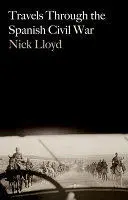
Travels Through The Spanish Civil War

Travels Through The Spanish Civil War

Nick Lloyd

Penguin

A revelatory journey into the Spanish Civil War's physical and visual legacies, investigating how conflict is memorialised, and obscured, today. Fifty years after Franco's death, and almost ninety since the Civil War began, the scars of violence still run deep in Spain. Nick Lloyd traces this legacy through a series of road trips. Travelling through Catalonia and Aragón, among...

22,49 €
Low stock
How The Spanish Empire Was Built

How The Spanish Empire Was Built

Felipe Fernández-Armesto / Manuel Lucena Giraldo

Reaktion

"A richly researched account of the clever, industrious and deeply practical men who followed in the footsteps, often literally, of Columbus, Cortés, Pizarro, Núñez de Balboa and others."—Wall Street Journal The untold story of the engineering behind the empire, showing how imperial Spain built upon existing infrastructure and hierarchies of the Inca, Aztec, and more, to furth...

16,25 €
Low stock
An Economic History Of The Iberian Peninsula, 700-2000

An Economic History Of The Iberian Peninsula, 700-2000

Pedro Lains / Leonor Freire Costa / Regina Grafe / Alfonso Herranz-Loncán / David Igual-Luis / Vicente Pinilla / Hermínia Vasconcelos Vilar

Penguin

This is a comprehensive long-run history of economic and political change in the Iberian Peninsula. Beginning with the development of the old medieval kingdoms, it goes on to explore two countries, Portugal and Spain, which during the early modern period possessed vast empires and played an essential role in the global economic and political developments. It traces how and why ...

49,99 €
Low stock
Madrid

Madrid

Luke Stegemann

Yale

The miraculous story of Madrid--how a village became a great world city For centuries Madrid was an insignificant settlement on the central Iberian plateau. Under its Muslim rulers the town was fortified and enlarged, but even after the Reconquista it remained secondary to nearby Toledo. But Madrid's fortunes dramatically shifted in the sixteenth century, becoming the centre...

16,25 €
Low stock
Cádiz

Cádiz

Helen Crisp / Jules Stewart

C Hurst & Co Publishers Ltd

This is the tale of Western Europe's oldest continuously inhabited city, a 3,000-year history of war and seafaring, culture and commerce, liberalism and resistance. Helen Crisp and Jules Stewart offer a vibrant account of Cádiz past and present, from its ancient founding myths to its reinvention as a trendy tourist destination. They illuminate Cádiz's experiences under Roman an...

31,25 €
Low stock
El Cid

El Cid

Nora Berend

Phoenix

"Rodrigo Diaz lived a violently colourful life in eleventh-century Spain. An ambitious military leader, exile and brutal mercenary, he served Christian kings, fought against Christian princes in service of Muslim rulers, raided and killed Muslims and eventually struck out on his own, carving out an independent principality. While Rodrigo the man is long dead, El Cid lives on: a...

21,25 €
Low stock