
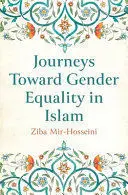
Journeys Toward Gender Equality In Islam
Ziba Mir-Hosseini
If justice is an intrinsic value in Islam, why have women been treated as second-class citizens in Islamic legal tradition?If justice is an intrinsic value in Islam, why have women been treated as second-class citizens in Islamic legal tradition? Today, the idea of gender equality, inherent to contemporary conceptions of justice, presents a challenge to established, patriarchal...
Synopsis
If justice is an intrinsic value in Islam, why have women been treated as second-class citizens in Islamic legal tradition?If justice is an intrinsic value in Islam, why have women been treated as second-class citizens in Islamic legal tradition? Today, the idea of gender equality, inherent to contemporary conceptions of justice, presents a challenge to established, patriarchal interpretations of Sharia. In thought-provoking discussions with six influential Muslim intellectuals - Abdullahi An-Na'im, Amina Wadud, Asma Lamrabet, Khaled Abou El Fadl, Mohsen Kadivar and Sedigheh Vasmaghi - Ziba Mir-Hosseini explores how egalitarian gender laws might be constructed from within the Islamic legal framework.
Related Articles